
There's something about hurricane season that messes with human psychology. It's not that people don't know it's coming — everyone on the Gulf Coast, the Atlantic Seaboard, and throughout the Caribbean knows the drill. June 1st arrives every single year like clockwork. And yet, somehow, it always feels like a surprise.
The grocery stores empty out. The hardware stores run out of plywood. The gas stations have lines wrapping around the block. And you're standing there thinking: I really should have done this last month.
Here's the thing — preparation isn't about panicking. It's about spending a couple of calm afternoons getting things in order so that when a Category 3 is bearing down on your coastline, you're not scrambling. You're ready. And that distinction makes all the difference in how you think, feel, and act when it matters most.
Think in phases, not a panic list
The mistake most people make is treating hurricane prep like a single event — one big shopping trip, one afternoon of effort. But real preparedness unfolds in layers, spread out over time, so it never feels overwhelming.
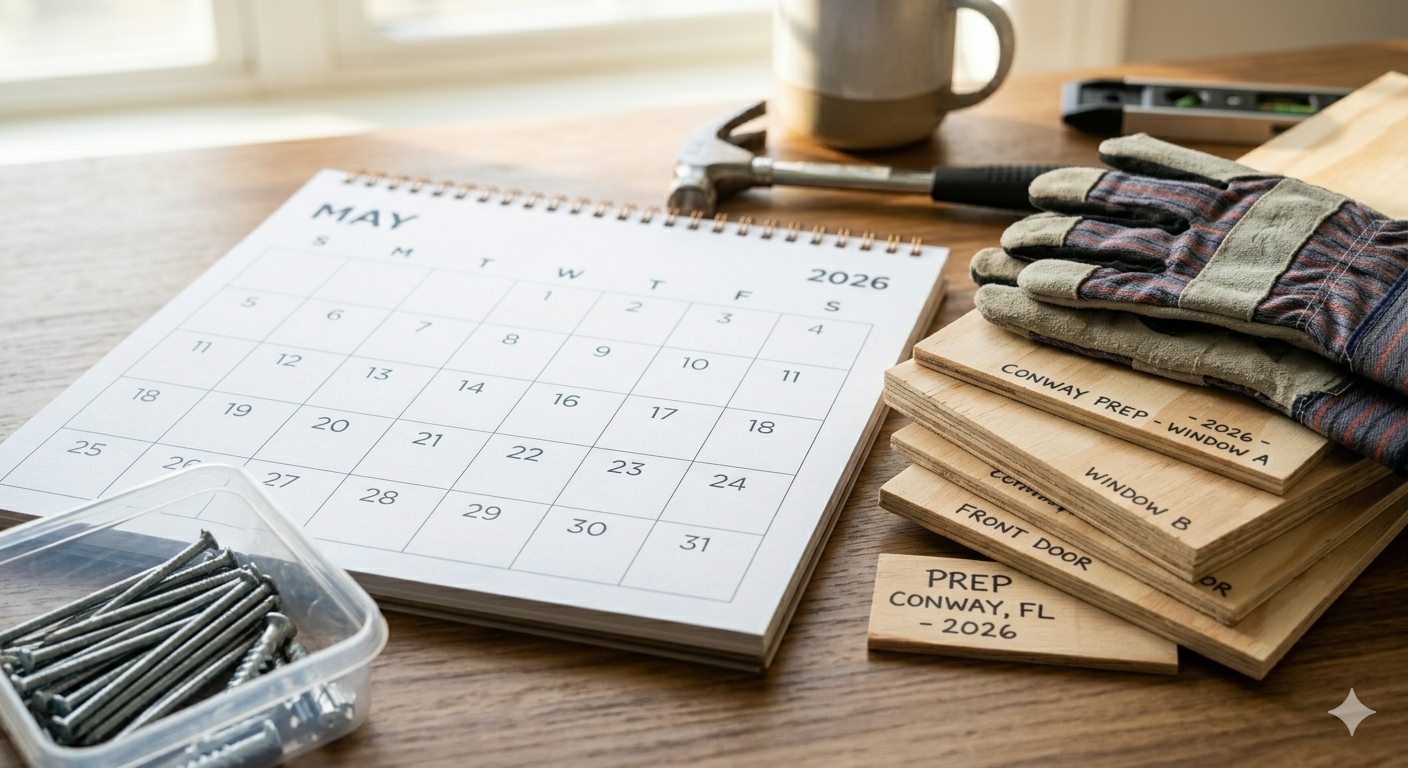
Prep done in May means no panic in June. Label your boards, know your timeline.
Before the season
Stock supplies, review your plan, check your insurance
Watch issued
Fill the gas tank, charge devices, secure outdoor items
Warning issued
Evacuate if ordered, shelter in place if not, stay off roads
After the storm
Wait for all-clear, document damage, avoid floodwaters
Your essential supply kit
FEMA recommends enough supplies to last at least 72 hours — but if you've lived through a serious hurricane, you know that's often not enough. Aim for two weeks of self-sufficiency, especially if you're in a flood-prone area where roads can be impassable for days.
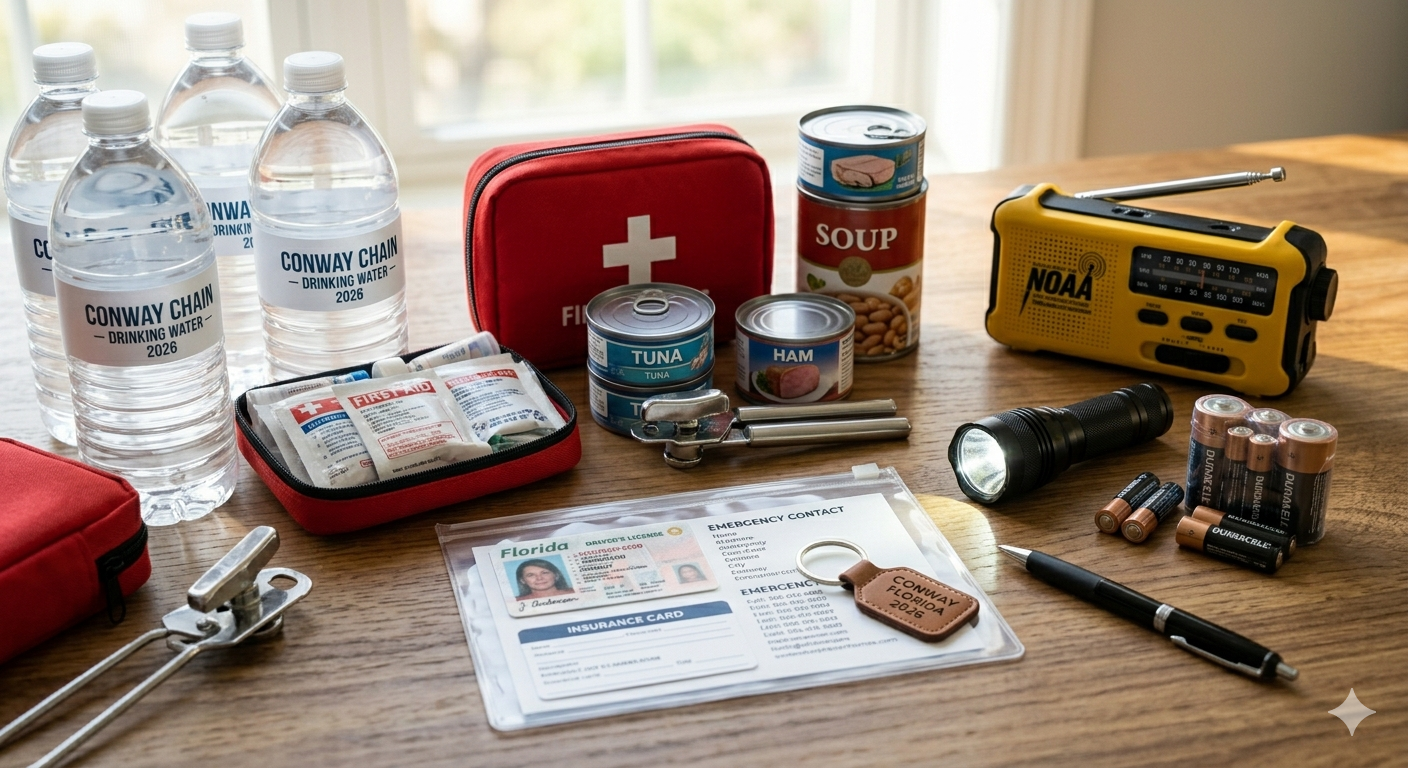
A proper kit goes beyond basics — water, food, documents, radio, and light sources all in one place.
Interactive checklist — click to check off
The conversation most people avoid
One of the most important parts of hurricane preparedness has nothing to do with supplies. It's sitting down with your household — your partner, your kids, your elderly parents — and actually talking through what you'll do.
Where will you go if you evacuate? Who's responsible for getting the pets? What's the designated out-of-state contact everyone calls? What do you do if you get separated? These feel like uncomfortable conversations, but having them once in a calm moment is far better than trying to figure it out when you're terrified and the clock is running.
"The storm doesn't care if you weren't ready. But the people who love you do."
Write your plan down. Put it somewhere accessible — physically, not just on your phone that might run out of battery. Know your evacuation routes. Identify two or three places you could go: a friend's house inland, a family member's place, a pet-friendly hotel several hours away.
The most dangerous thing you can do during a hurricane is wait too long to leave. Authorities issue mandatory evacuation orders for good reason. If you're told to go, go. Belongings can be replaced. Roads become impassable fast, and emergency services can't reach you once a storm makes landfall. Don't be the person who says "I've ridden out worse" — because one day, that stops being true.
A word on homeowners insurance
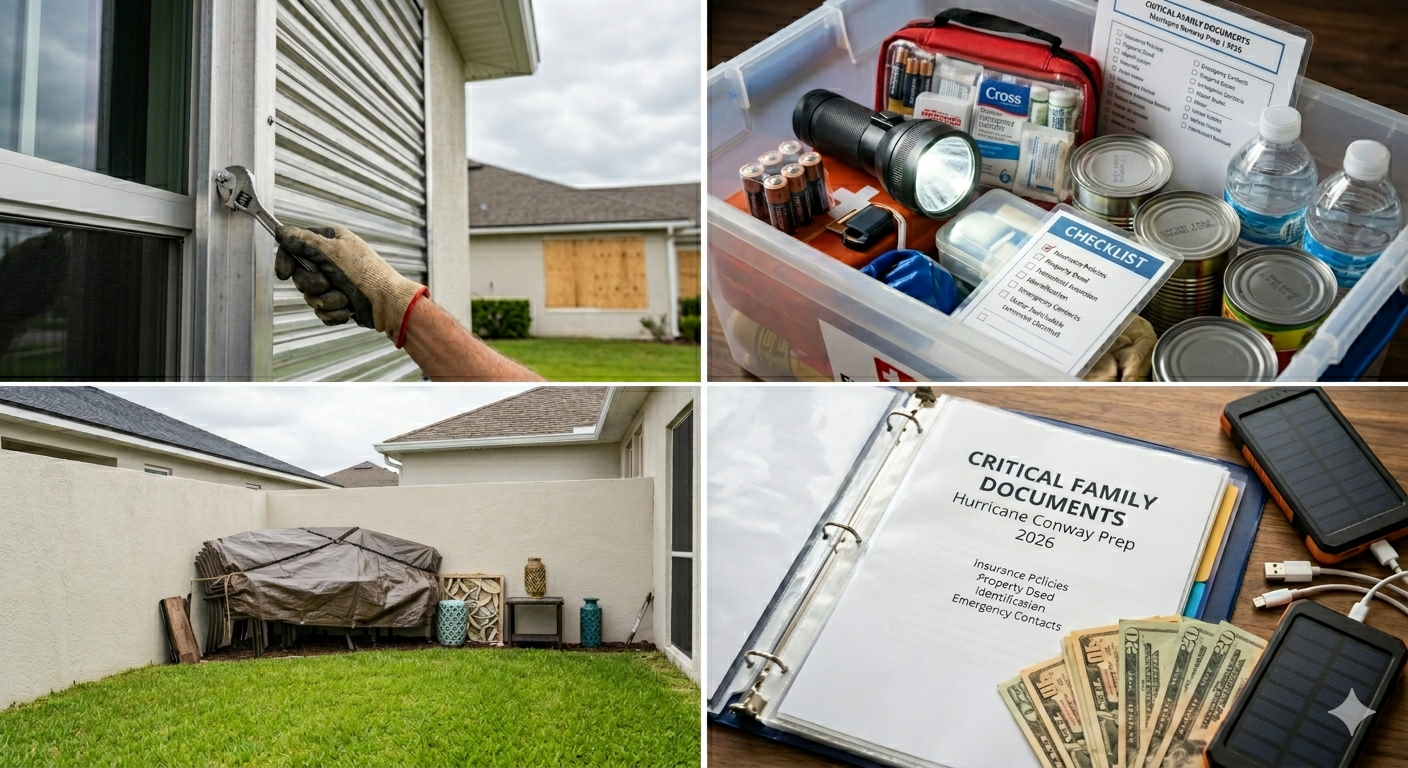
Shutters up, yard cleared, documents organized, kit packed — four things you can do this weekend.
Pull out your policy right now and read it. Don't wait for a storm to find out what you're actually covered for. Standard homeowners insurance does not cover flood damage — that's a separate policy entirely, and in many coastal areas it can take 30 days to take effect after purchase. If you're in a flood zone and don't have flood insurance, that's a gap worth closing before June 1st.
Take a video walkthrough of every room in your house. Open drawers. Show serial numbers on appliances. Store that video somewhere in the cloud — not just on a local hard drive that could be destroyed in the same storm you're trying to document damage from. This ten-minute task can save you months of headaches when filing a claim.
The small stuff that adds up
A few things people consistently forget: fill your bathtubs with water before a storm (your toilet will still flush even without running water). Freeze blocks of ice to preserve food longer during outages. Bring in anything in your yard that could become a projectile — furniture, potted plants, decorations, grills. Know where your utility shutoffs are and how to use them.
If you have a generator, test it now. Not during the storm — now, when you can calmly figure out why it won't start. Stock up on fuel ahead of time and store it safely. Remember: generators should never run indoors or in an attached garage. Carbon monoxide poisoning kills more people after storms than the storms themselves do.
None of this is complicated. It's just the kind of thing that's easy to put off until it's too late. The season is coming. The good news is you still have time — and that's exactly the kind of news worth acting on.
For official preparedness resources, visit ready.gov/hurricanes and your local emergency management agency. Season runs June 1 – November 30.
Check out this article next