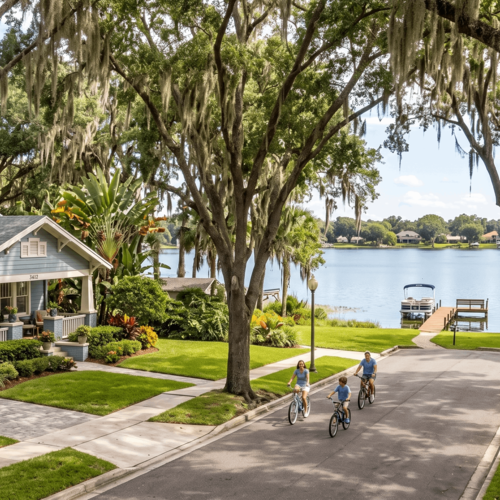

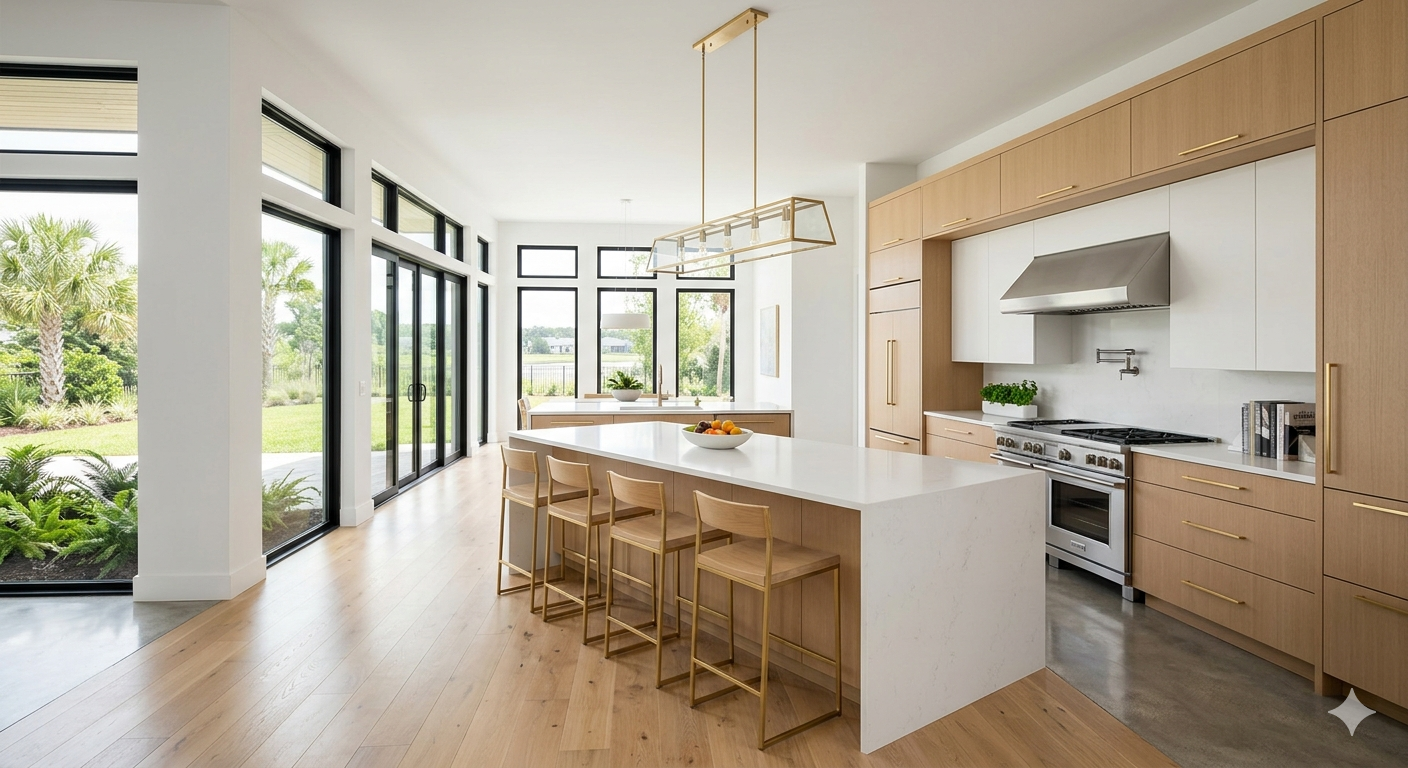
Two homes listed at $500,000 in Orlando — one a resale in Conway, one a brand-new build with builder incentives — and the new construction comes out cheaper every single month. That's not a sales pitch, that's the math a lot of buyers are missing right now. Most people shopping for a home in 2026 are still leading with sticker price, which makes sense on the surface, but that approach is causing a lot of budget-conscious buyers to walk past genuinely better deals without realizing it. Builder-affiliated lenders are currently offering rate buy-downs as low as 2.875% on 2-1 buy-down programs, and fixed rates at 3.99% on select quick move-in homes — numbers that resale sellers simply can't match. On top of that, builders are handing out anywhere from $25,000 to $45,000 in flex cash that can wipe out closing costs or permanently reduce your rate. Then factor in that a 2026 build runs tighter on energy costs and typically carries lower insurance premiums than older resale inventory, and the monthly payment gap between the two options starts to look less like a coincidence and more like a structural advantage. This article breaks all of that down with real numbers — no vague market commentary, just a side-by-side look at what a $500k resale actually costs per month versus what a $500k new build with full incentives costs, so you can make a confident, informed decision. So where exactly do the savings show up, and how do you make sure you're capturing all of them?
Why a New Build Can Cost Less Per Month Than Resale Right Now
Two homes priced at $500,000 sitting side by side on Zillow — and the brand-new one is cheaper every month. That's not a promotional trick, it's a direct result of how builder-affiliated lenders are currently structuring financing deals that no private resale seller has the tools or incentive to replicate.
Same Price, Very Different Monthly Payment
A $500,000 resale home financed at the current market rate of around 6.5% puts your principal and interest payment at roughly $3,160 per month. That same $500,000 new build, financed through a builder's preferred lender at a 3.99% fixed incentive rate, drops that payment to approximately $2,385 per month — a difference of nearly $775 every single month. You're capable of stretching your budget further just by choosing the right financing structure, not by finding a cheaper home. Matching purchase prices doesn't mean matching monthly obligations, and that gap is where buyers who focus only on listing price consistently lose ground.
Why This Is Happening Right Now
Builders are carrying completed inventory that needs to move, and their affiliated lenders have the financial flexibility to subsidize rates in ways a typical homeowner selling a resale simply cannot. A private seller can drop their asking price, but they can't hand you a below-market mortgage rate — that requires a lender relationship and capital that only large-scale builders maintain. Right now, Orlando-area builders are deploying that advantage aggressively. Across the metro, 121 communities are reportedly offering special deals in 2026, with incentives ranging from rate buy-downs to flex cash packages worth $25,000 to $45,000. Some deals go further — "up to $60K off select inventory homes plus Flex Dollar incentives" is currently being advertised across several communities. Orlando's #1 builder by permits is offering closing cost credits up to $15K combined with rate buydowns on QMI homes, which directly reduces the out-of-pocket cost at closing while simultaneously lowering the monthly payment.
It's worth being direct about one thing — this isn't a permanent shift in how new construction is priced. Builders are running these programs because current market conditions make it necessary for them to compete for buyers. When inventory tightens or rates drop on their own, the incentive packages will shrink. The window you're looking at right now is tied specifically to 2026 builder strategy, not a new standard for how the market works.
Comparing homes strictly by total monthly cost — not just the number on the listing — gives you a far more accurate picture of what you're actually committing to for the next 30 years. That means factoring in the financed rate, any buy-down structure, closing cost credits applied to reduce your loan balance, and the ongoing costs that come with the home itself. The listing price is just the starting point, and in 2026, it's one of the least useful numbers in the comparison.
The $500K Side-by-Side Checklist Buyers Should Run First
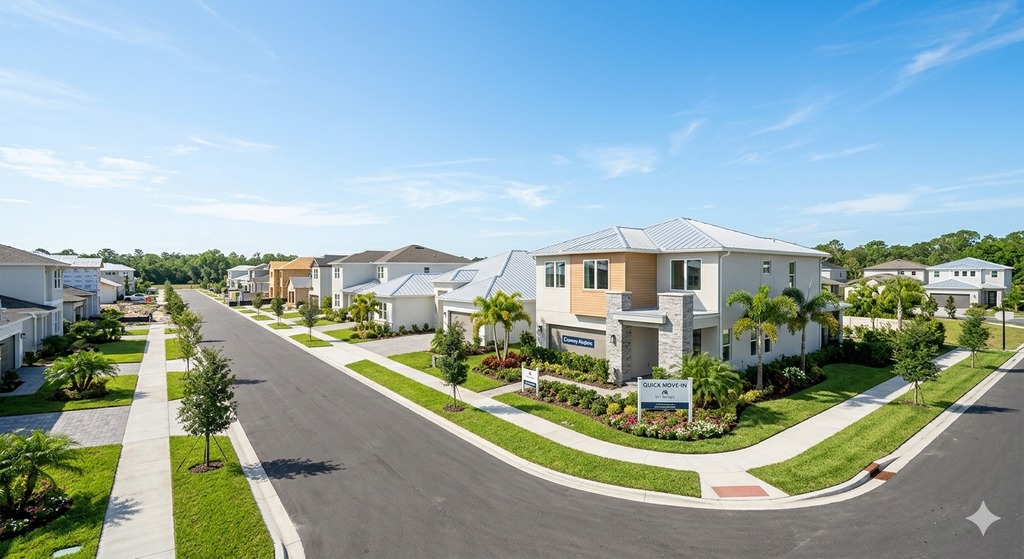
Running the numbers on any home purchase across six specific cost categories — before you make an offer — is what separates buyers who get a genuinely good deal from those who simply got a good-looking listing price. Pull this checklist out for every resale and every new build you're seriously considering, and fill in each line with real figures from your lender and builder.
- Principal and interest — This is where the gap between a $500,000 resale and a $500,000 new build becomes impossible to ignore. A resale financed at the current market rate of around 6.5% puts your monthly principal and interest at roughly $3,160. A new build using a builder-affiliated lender's 3.99% fixed incentive rate drops that same figure to approximately $2,385 — a $775 monthly difference on identical purchase prices.
- Closing costs — On a $500,000 resale, expect to bring $10,000 to $15,000 to the table at closing. Builder flex cash packages ranging from $25,000 to $45,000 can cover this entirely on a new build, which means you're either keeping that cash in your pocket or applying it to further reduce your loan balance and monthly payment.
- Insurance — Older resale homes in areas like Conway are carrying significantly higher homeowner's insurance premiums than newly built properties, largely due to outdated roofing, electrical systems, and wind mitigation ratings. A 2026 build meets current Florida building codes, which insurers price more favorably — often resulting in $100 to $200 less per month compared to a comparable older home.
- Utilities — New construction built to 2026 energy standards uses better insulation, higher-efficiency HVAC systems, and low-e windows that older resale homes simply don't have. The monthly utility savings on a new build versus a 10-to-20-year-old resale can run $150 to $250 depending on home size, which adds up to real money over a 12-month period.
- HOA fees, if applicable — Both resale and new build communities can carry HOA fees, but the structure differs. New construction HOAs often include amenities like resort-style pools and fitness centers, while older resale HOAs may charge similar fees for far less. Always request the full HOA fee schedule and what it covers before comparing this line item.
- Repair and maintenance risk — A resale home carries unknown repair exposure from day one — aging HVAC units, older roofing, and plumbing that may need attention within the first few years of ownership. A new build comes with builder warranties covering structural components, systems, and workmanship, which removes a significant financial variable from your monthly budget planning.
Totaling all six categories across both options is what makes this checklist worth using — it's how buyers capable of thinking beyond list price consistently spot the better deal. The combined monthly difference between a $500,000 resale and a $500,000 new build with full incentives can reach approximately $880 per month. Bringing this filled-out checklist to every showing, every lender call, and every builder visit gives you a concrete framework to compare "insurance & tax blind spots most buyers miss" alongside financing — so no single number skews your decision.
How Builder Rate Offers Are Changing the Payment More Than the Price
The purchase price on a new build and a resale can be identical, yet the monthly payment on the new build can run hundreds of dollars lower — and that gap comes entirely from how the financing is structured, not from any difference in what the home is worth.
How Builder Rate Offers Actually Work
Builder-affiliated lenders operate differently from the mortgage companies you'd approach independently. Because large-scale homebuilders maintain direct relationships with their lending arms, they can subsidize your interest rate upfront by paying discount points to the lender on your behalf — which, as Norada Real Estate notes, "permanently lowers your interest rate" for the entire 30-year loan term." That's a meaningful distinction. You're not getting a promotional gimmick; you're getting a structurally lower rate that was purchased using the builder's own capital before you ever signed a contract.
The two main tools builders are using right now are permanent buy-downs and temporary 2-1 buy-downs. On select quick move-in homes, some Orlando-area builders are offering fixed rates around 3.99% — a full two-and-a-half percentage points below the current market rate of roughly 6.5%. That difference, applied to a $500,000 loan, produces a monthly principal and interest swing of several hundred dollars. The 2-1 buy-down takes a different approach, front-loading the savings even further in the early years of the loan.
What a Temporary Buy-Down Looks Like Year by Year
A 2-1 buy-down works by temporarily reducing your rate in a structured sequence. In year one, your rate sits 2% below the note rate — so if your base rate is 5.875%, you'd pay interest at 3.875% for the first 12 months. In year two, the rate steps up by 1%, landing at 4.875%. From year three onward, the rate holds at the full note rate of 5.875% for the remaining loan term. As Norada Real Estate describes it, builders "subsidize your payment so your rate is 2% lower in the first year and 1% lower in the second year," which creates immediate monthly payment relief right when buyers typically need it most — during the adjustment period of moving into a new home.
Why New Builds Can Offer This and Resales Usually Can't
A private homeowner selling a resale property has no mechanism to offer rate incentives. They can negotiate on price, cover some closing costs, or throw in appliances, but they cannot pre-pay mortgage points on your behalf — that requires a capitalized lending relationship that individual sellers don't have. Builders, particularly large national operators, maintain that infrastructure specifically to move completed inventory faster. M/I Homes, for example, has been promoting fixed-rate incentives around 4.875% with 20% down on select inventory, while D.R. Horton has offered base rates around 3.99% in select markets. Both are active in the Orlando metro.
Comparing quick move-in homes adds another layer of advantage — these are completed builds that close on a standard resale timeline, meaning you get the rate incentive without waiting six to twelve months for a home to be built.
Where Flex Cash Creates Savings Buyers Can Actually Feel
Flex cash is builder-allocated money assigned to your transaction that you direct toward specific costs — it's not a vague discount or a marketing term. Builders like Richmond American Homes structure it so buyers can apply it toward closing costs, a permanent interest rate buydown, or even a direct reduction on the purchase price, giving you real control over where the savings land.
Here's where that money makes the most measurable difference —
- Closing costs stop draining your savings account. On a $500,000 purchase, closing costs typically run between $10,000 and $15,000 — money that comes straight out of your liquid savings before you even get the keys. Flex cash applied here means you close without gutting your financial cushion, which matters enormously for first-time buyers who've spent years building that reserve. Richmond American Homes, for example, offers "up to $35K toward homes that can close in a timely manner," which more than covers closing costs on most transactions in this price range.
- Directing flex cash toward a permanent rate buydown compounds the savings over time. Rather than using the full allocation on closing costs, some buyers split it — covering a portion of closing costs and using the remainder to purchase additional discount points on their mortgage. Each point typically reduces the interest rate by 0.25%, and on a 30-year loan at $500,000, that reduction translates to roughly $80 to $90 less per month, every month, for the life of the loan.
- The incentive range across Orlando's new construction market runs $25,000 to $45,000, with some communities pushing well beyond that ceiling. Richmond American Homes currently advertises "special financing + up to $17K in Flex Funds on quick move-in homes," and that's separate from additional promotional value that can reach $20,000 toward closing costs or a rate buydown. When both programs stack, the combined benefit can exceed what most buyers expect from a builder negotiation.
- Flex cash can also reduce the upfront cash you need to bring to closing, which changes the math for buyers who are qualified on income but tight on liquid assets. If a builder covers $15,000 in closing costs through flex funds, that's $15,000 you're capable of keeping in reserve — or redirecting toward your down payment to lower the loan balance and monthly payment simultaneously.
Resale sellers operate without this kind of financial infrastructure. A private homeowner can negotiate on price or offer a small concession, but they cannot pre-fund a rate buydown or absorb your closing costs through an institutional program — that requires the capital and lender relationships that only large-scale builders maintain. Flex cash is where the new construction advantage stops being theoretical and starts showing up as a lower number on your monthly bank statement, which is the figure that actually determines whether a home fits your budget for the next 30 years.
Why Lower Utility and Insurance Costs Matter More Than Buyers Expect
The mortgage payment is the number most buyers fixate on, and for good reason — it's the biggest line item. But the total cost of owning a home extends well beyond what hits your bank account on the first of every month, and for buyers comparing a 2026 new build against older Conway-area resale inventory, that distinction can be worth more than most people expect.
What a Newer Build Actually Costs to Run
A home built to 2026 construction standards operates fundamentally differently from a resale home built 15 or 20 years ago. Modern builds use spray foam or high-density batt insulation, low-e double-pane windows, and high-SEER HVAC systems that are sized precisely for the home's square footage — none of which are standard features in older Conway resale stock. The result is a home that retains conditioned air far more efficiently, which matters enormously in Central Florida where cooling costs run year-round. "ENERGY STAR homes bring 20% more savings on utility bills," and when you factor in that ENERGY STAR appliances bring $450 of energy savings annually, the monthly utility gap between a new build and an older resale becomes a real, measurable number — not a rough estimate. Across a 12-month period, buyers in newer construction are consistently spending $150 to $250 less per month on electricity alone compared to owners of older homes with aging systems and minimal insulation upgrades.
Insurance Premiums and Hidden Repair Exposure
Homeowner's insurance in Florida is priced heavily around roof age, wind mitigation ratings, and the condition of electrical and plumbing systems — all areas where a 2026 build holds a clear structural advantage. A new roof built to current Florida Building Code carries a far better wind mitigation rating than a 15-year-old shingle roof on a Conway resale, and insurers price that difference directly into your annual premium. Buyers purchasing older resale homes are frequently quoted $200 to $400 more per month in insurance costs compared to buyers in newly built homes, depending on the property's age and condition. Beyond the premium itself, older resale homes carry near-term repair exposure that never appears on the listing sheet — an HVAC unit that's 12 years into a 15-year lifespan, a water heater approaching replacement, or electrical panels that may require updating to meet current code. A new build comes with builder warranties covering structural components, mechanical systems, and workmanship, which removes that financial uncertainty entirely from your first few years of ownership.
Stacking utility savings of $150 to $250 per month against insurance premium differences of $200 to $400 per month produces a combined ownership cost gap that can exceed $500 monthly between two homes listed at the same price. That number sits entirely outside the mortgage payment comparison, which means buyers who stop their analysis at principal and interest are working with an incomplete picture of what each home actually costs to own.
Where Orlando Buyers Are Finding the Strongest New Construction Deals
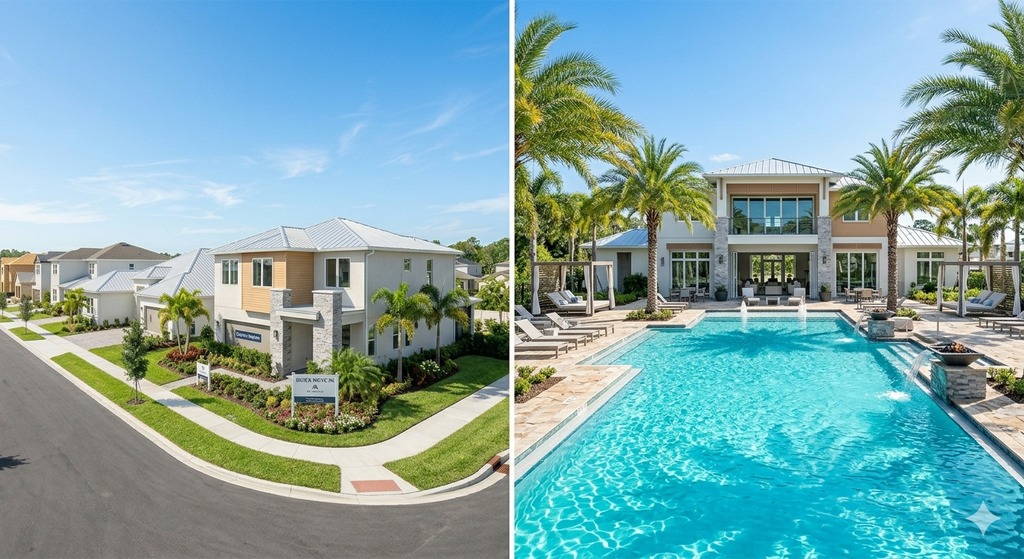
The cost advantages covered above aren't hypothetical — they're showing up in specific zip codes and communities across the Orlando metro right now, with builders actively competing for buyers through rate specials, flex cash allocations, and ready-to-close inventory.
- Sanford — Communities in the Sanford corridor are currently among the most active for quick move-in inventory, with several builders offering rate specials on completed homes that can close within 30 to 45 days. Buyers who need to move fast without sacrificing financing incentives are finding strong options here.
- Kissimmee — This area is seeing some of the most aggressive flex cash packages in the metro, with select communities offering deals that stack closing cost credits alongside temporary payment assistance — a combination that directly reduces what you bring to the table at closing.
- Orlando 32820 — The east Orlando zip code has a cluster of new construction communities running hot deal promotions on move-in-ready homes, including rate buy-down specials that push first-year payments well below what comparable resale homes in the area are demanding.
- Minneola — Located in Lake County just west of Orlando, Minneola communities are attracting buyers with a mix of fixed-rate incentives and flex dollar programs on homes that are already built and staged, cutting the typical wait time out of the equation entirely.
Beyond builder-level programs, qualifying buyers in select Orlando areas can also access local support through the Orange County and City of Orlando down payment assistance programs, which offer forgivable loans and grants ranging from $10,000 to $35,000 for income-eligible first-time buyers. Some downtown Orlando developments also carry impact fee rebates that reduce the upfront cost of purchasing in designated redevelopment zones — a detail most buyers overlook entirely when comparing new construction options across the metro.
First-time buyers stand to gain the most from this combination of builder incentives and local assistance programs, particularly those who are income-qualified but short on liquid assets for closing. Families whose primary concern is keeping the monthly payment within a specific range also benefit directly, since rate buy-downs and flex cash applied to discount points produce a lower payment that holds for the life of the loan — not just the first year. Buyers working against a deadline — job relocations, lease expirations, or school enrollment windows — are also well-positioned in this market, given that quick move-in inventory in Sanford, Kissimmee, and Minneola can close on a standard 30-to-45-day timeline.
Shifting your focus from the lowest list price to the strongest total package changes which homes make the shortlist. A home priced $15,000 higher in Minneola with a 3.99% fixed rate, $30,000 in flex cash, and a 45-day close date can outperform a cheaper resale in 32820 that closes at 6.5% with $12,000 in closing costs due at signing — and with properties now averaging 58 to 71 days on market across Orlando, builders are motivated to make those packages as competitive as possible.
What to Check Before You Assume Every Builder Incentive Is a Win
The savings documented throughout this article are real — but they're not automatic. Every advertised rate, flex cash figure, and closing cost credit comes with conditions attached, and the buyers who capture the full benefit are the ones who verify those conditions before signing anything.
Read the Terms Behind the Rate
Not every promoted rate applies to every home in a community. Builders typically reserve their most aggressive financing offers — the 3.99% fixed rates and 2-1 buy-downs starting at 2.875% — for specific quick move-in homes that are already completed and ready to close. If you're interested in a home that's still under construction or a different floor plan than the one featured in the promotion, the rate on offer may be meaningfully higher. Ask the sales agent directly which homes qualify for the advertised terms, and get that confirmation in writing.
Rate lock deadlines are another variable worth pressing on. Builder-affiliated lenders often require you to lock your rate within a specific window after signing the purchase agreement — sometimes as short as 30 days. Miss that window, and the promotional rate can expire, leaving you at whatever the market rate is at the time of closing. Borrower eligibility requirements also apply — these offers are often contingent on maintaining your credit score through the duration of the build to ensure you meet final qualification standards, which means any new debt, missed payment, or credit inquiry between contract and closing can affect your access to the incentive. And if the rate or credit is exclusive to the builder's preferred lender, you'll need to weigh that carefully — as Zillow notes, "if a builder offers a $10,000 credit, but their preferred lender's fees are $5,000 higher than an outside quote, the incentive still provides a $5,000 net gain" — but only if you run that comparison first.
Compare the Full Monthly Number, Not the Headline
A promotional rate only tells part of the story. The monthly payment you'll actually live with includes HOA fees, property taxes, and insurance — none of which appear in the builder's advertised financing figures. New construction communities in the Orlando metro frequently carry HOA fees ranging from $150 to $400 per month depending on the amenities included, and Florida's property tax assessments on newly built homes can shift significantly after the first year once the county reassesses the improved value. Insurance premiums should also be factored in using realistic quotes, not placeholder figures.
Getting both a resale loan quote and a builder loan quote on the same day is the most reliable way to make a fair comparison. Rates move daily, so quotes pulled a week apart aren't measuring the same market conditions. Running both quotes simultaneously gives you a clean, side-by-side view of the true monthly cost — principal, interest, taxes, insurance, and HOA — across both options. That's the number that determines whether the incentive is genuinely delivering savings or simply shifting costs from one line item to another.
Treating this verification process as a standard step — not an optional one — is what separates buyers who feel confident at closing from those who feel uncertain about whether they got the deal they thought they were getting.
Final Thoughts
The numbers in Orlando's 2026 market tell a story that most buyers aren't expecting. Two homes listed at $500,000 can produce very different monthly payments depending on whether one of them comes with builder incentives attached — and that gap is significant enough to change the decision entirely.
What makes new construction competitive right now isn't just the price tag. It's the combination of factors that stack on top of each other — rate buy-downs bringing introductory rates as low as 2.875%, flex cash ranging from $25,000 to $45,000 covering closing costs or buying the rate down further, and then the ongoing savings from lower utility bills and cheaper insurance on a 2026 build versus older resale inventory like what you'd find in Conway. Each of those pieces alone is worth something. Together, they can shift the monthly payment comparison by several hundred dollars.
The biggest mistake buyers make is comparing homes by purchase price instead of total monthly cost. Sticker price is just one number. What you actually pay each month — after factoring in the rate, insurance, utilities, and what you brought to closing — is what determines whether you got a good deal.
You're capable of running that comparison yourself. Pull the payment on a resale you're considering, then run the same check on a quick move-in new construction with incentives applied. The math is straightforward, and the results might surprise you. The better deal in 2026 may not be where you first looked.
Check out this article next